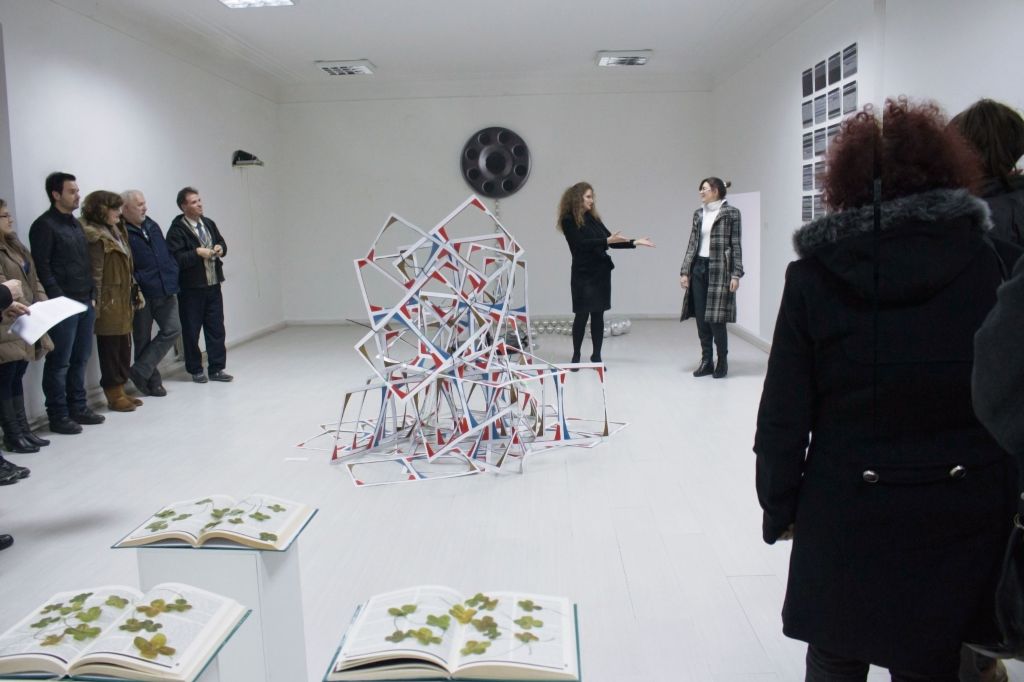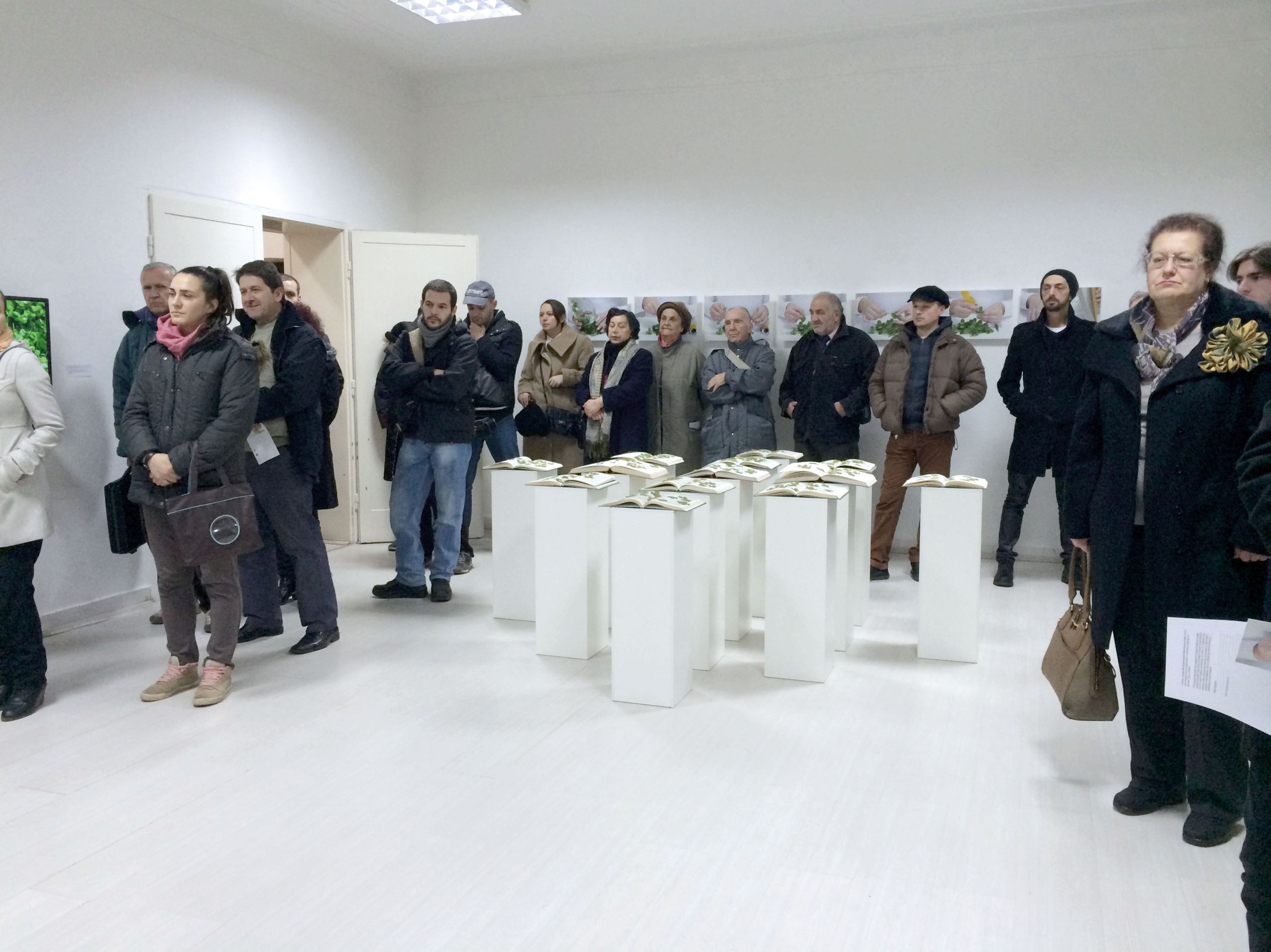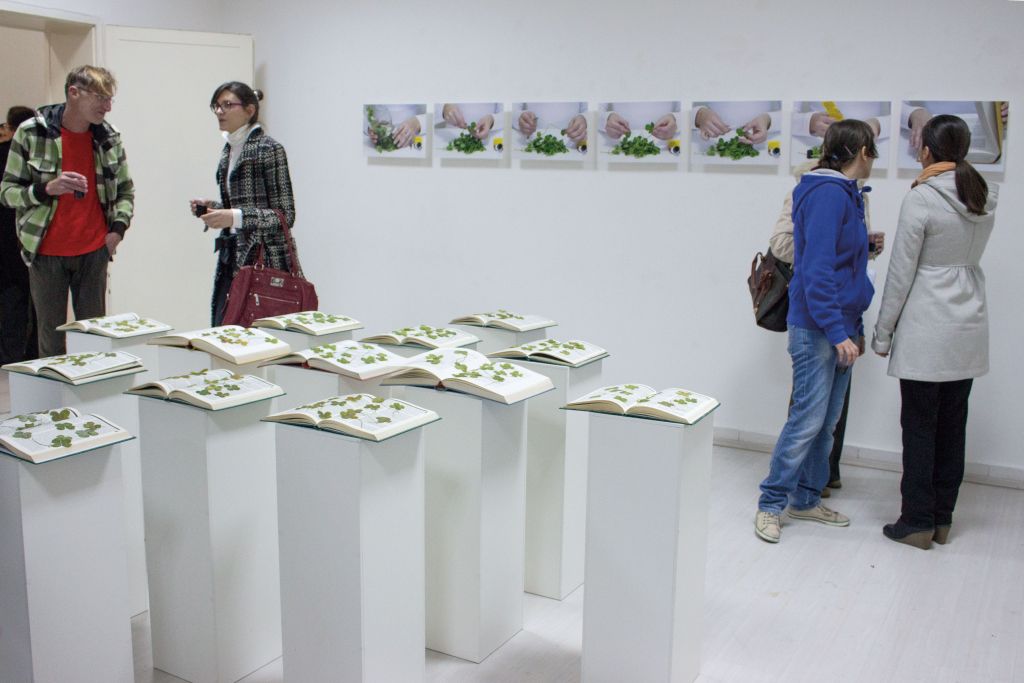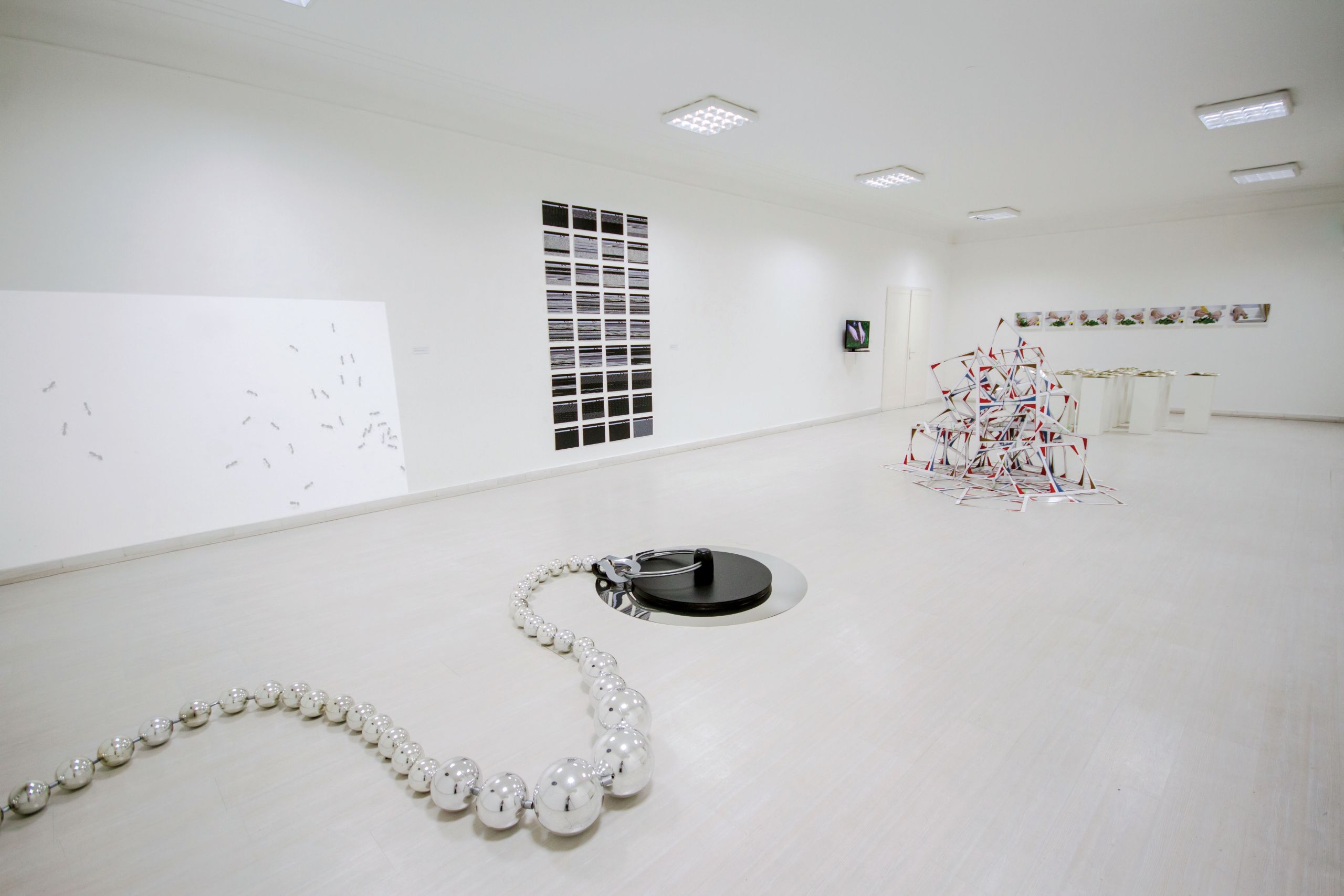

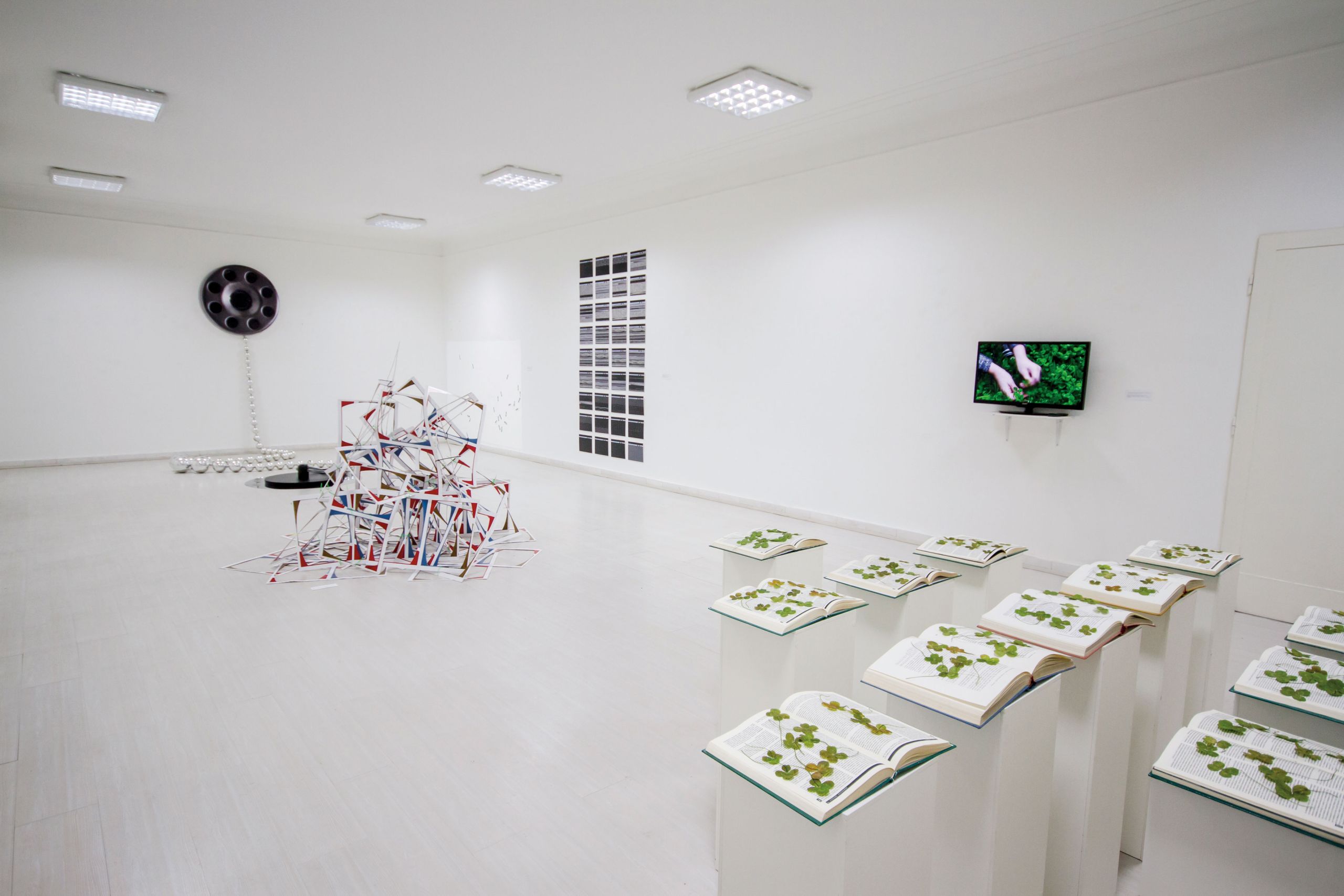
The art installation “Luck” was first exhibited from December 24, 2014 to January 20, 2015 in the solo show “Cleanroom” at Gallery KO-RA, House of Culture “Koco Racin”, alongside four other conceptually associated artworks.
The exhibition “Cleanroom” displays five complex works, installations including photos, graphics, objects, videos and sound. All the works making this project have something in common, and that is the element of chance which is used as a principle of their creation, or else the results of a random situation are used for their creation.
The path we are moving along, whatever direction we have determined it, is regulated by random situations. These random situations arrange us a pleasant or an unpleasant surprise, on this path we suddenly lose something and get something, but its inevitable direction is always forward. What remain from the past are our memories which we store in our brains. To ensure that something will not be forgotten, we write it down on paper, make hundreds of photos as a memory, store most data in digital form on storage media… all in order to keep them as much as possible longer, but often happen to be lost forever. Unfortunately, the human brain as the whole human body is very fragile and no form of material existence is eternal, regardless its longevity and method
of preservation.
The title of this project, “Cleanroom” or “Clean Room”, is borrowed from the terminology used in production or research work, and it indicate an environment with controlled level of contamination by solid particles. This title stands as a kind of symbol for the gallery space where five different situations of everyday life are taken out of context and placed for observation, intervention and repair. Specialized services that extract and save data from corrupted digital media such as hard discs, USBs, CDs, etc., like surgical operations on human body which are carried out under sterile conditions in surgical room to avoid infections, are carried out in specific conditions of the so-called “Clean Room”, thus avoiding further damage and data loss that can be caused even by the smallest dust particles in contact with the medium. Hence the incentive to use the term “Clean Room” as a title of the exhibition, as a place where in isolated and controlled environment mistakes are repaired.
The works in this exhibition are created by recycling the memories, data, materials, objects… and they revise what is accidentally lost, than recovered or found in some random situation. By placing them in the context of the artwork their character is changed and they are used as an accessory for expressing certain points of view on various aspects of the modern life.
How was the artwork “Luck – Counterfeit Four-leaf Clovers” created?
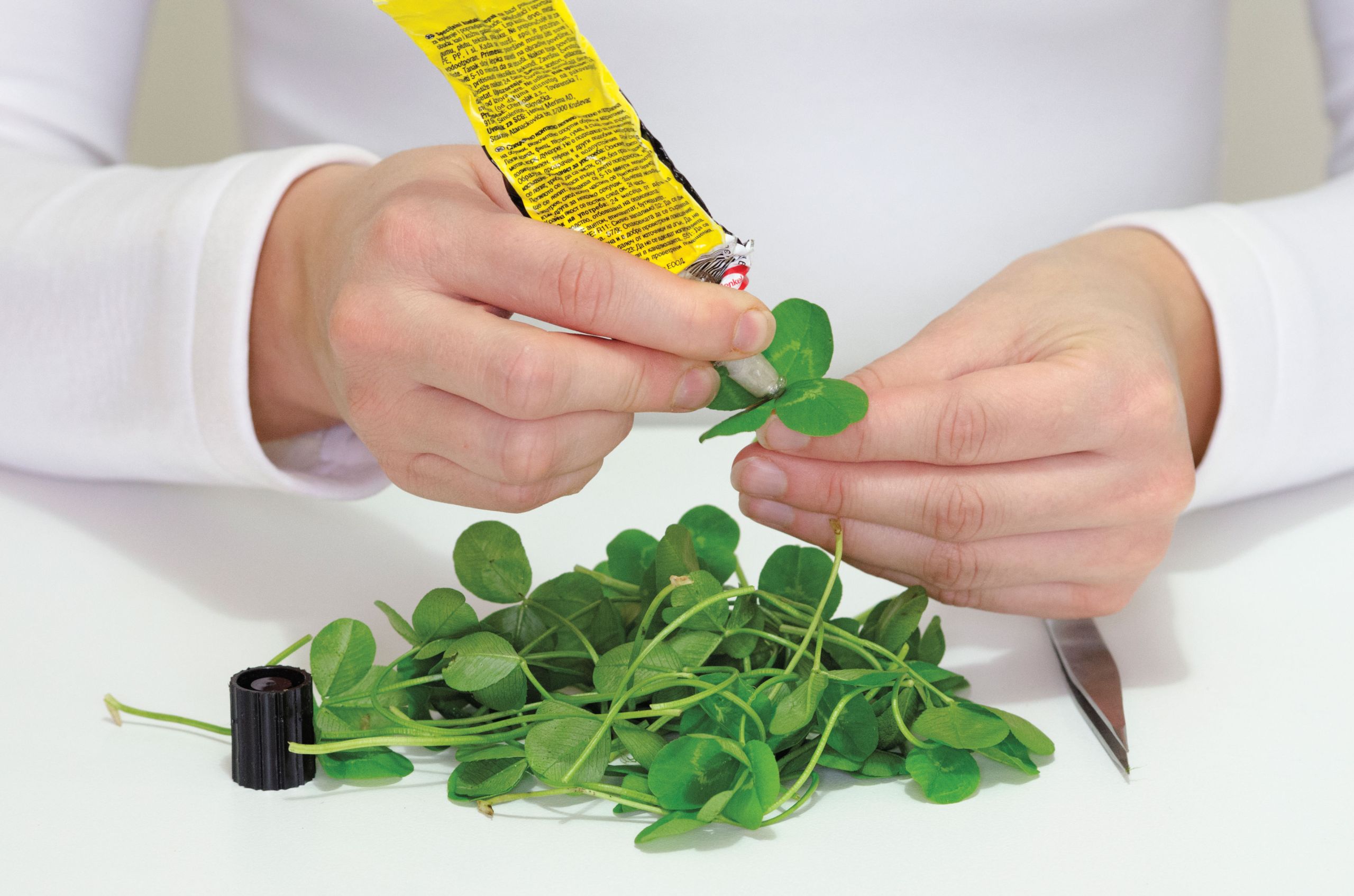
In the childhood, I spent the days of my summer holiday in the countryside. One of the interesting activities there was searching for four-leaf clovers. Sometimes it was not difficult to find them, but sometimes unsuccessful search lasting for hours was really frustrating. I remember that in such a situation I decided to make a four-leaf clover myself, by sticking a fourth leaf to the usual trifoliate clover and I made not just one but many four-leaf clovers.
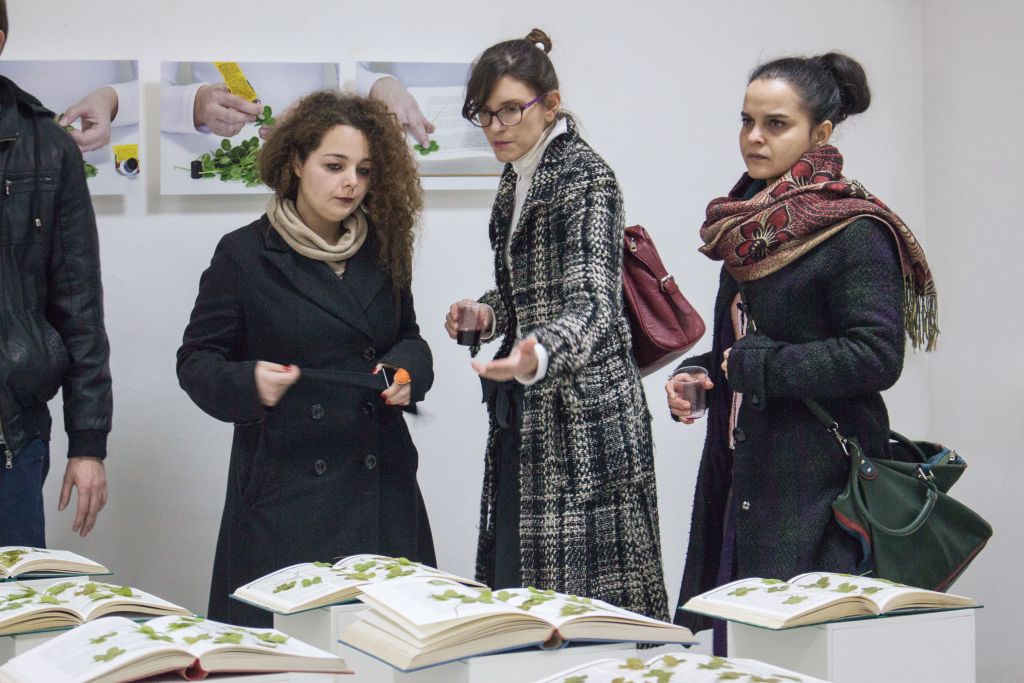
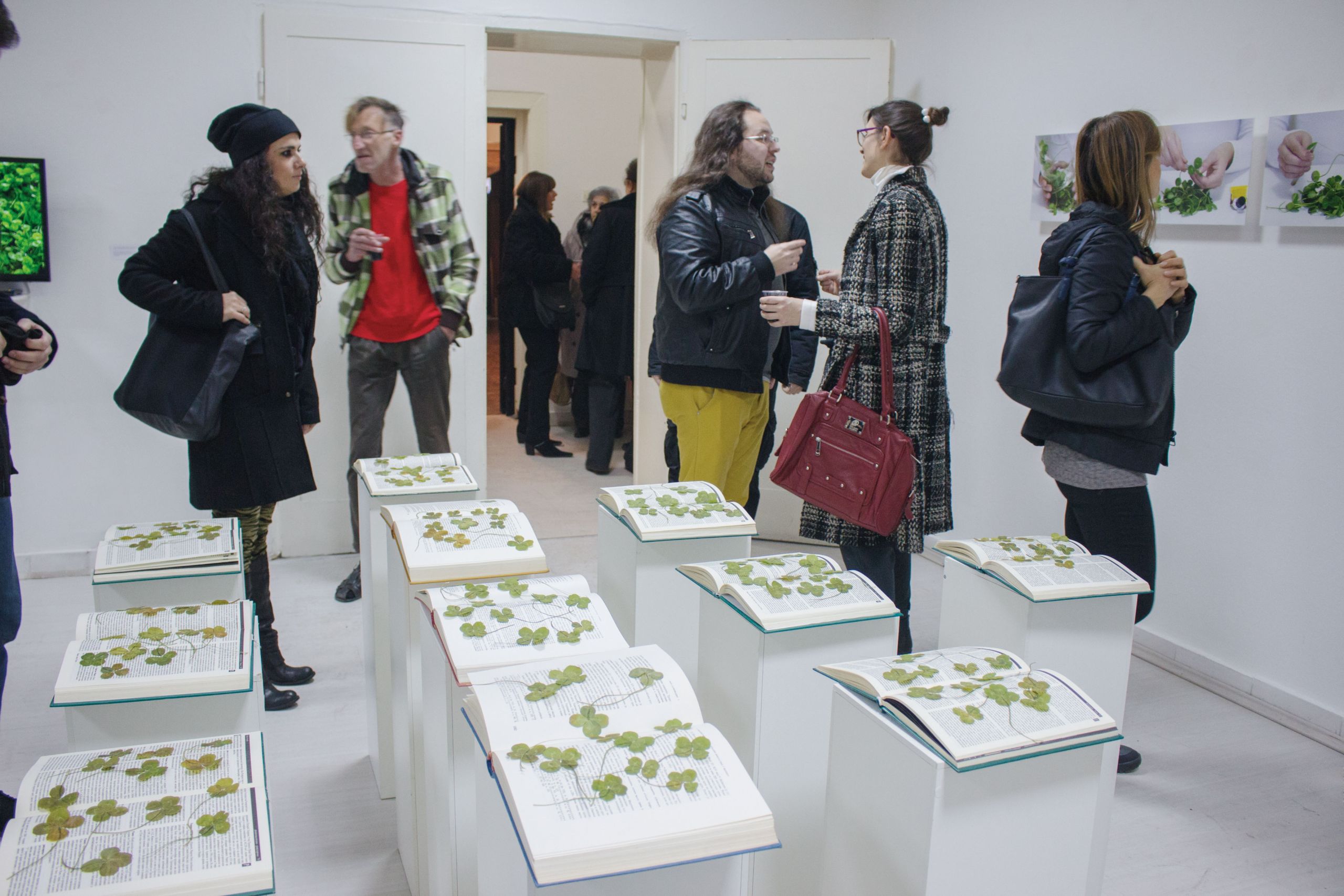
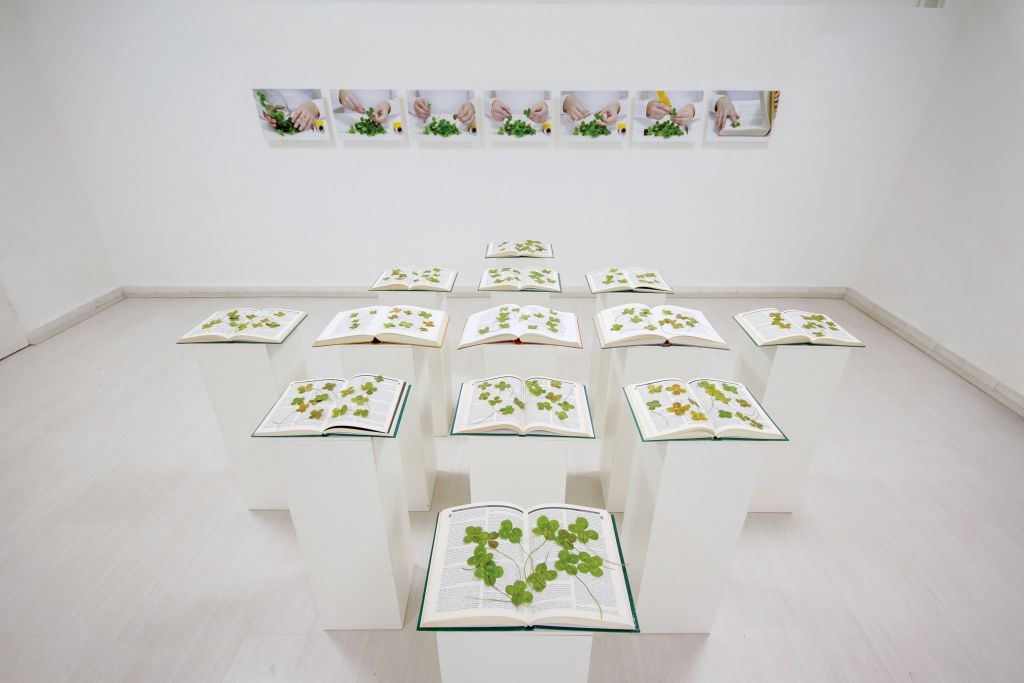
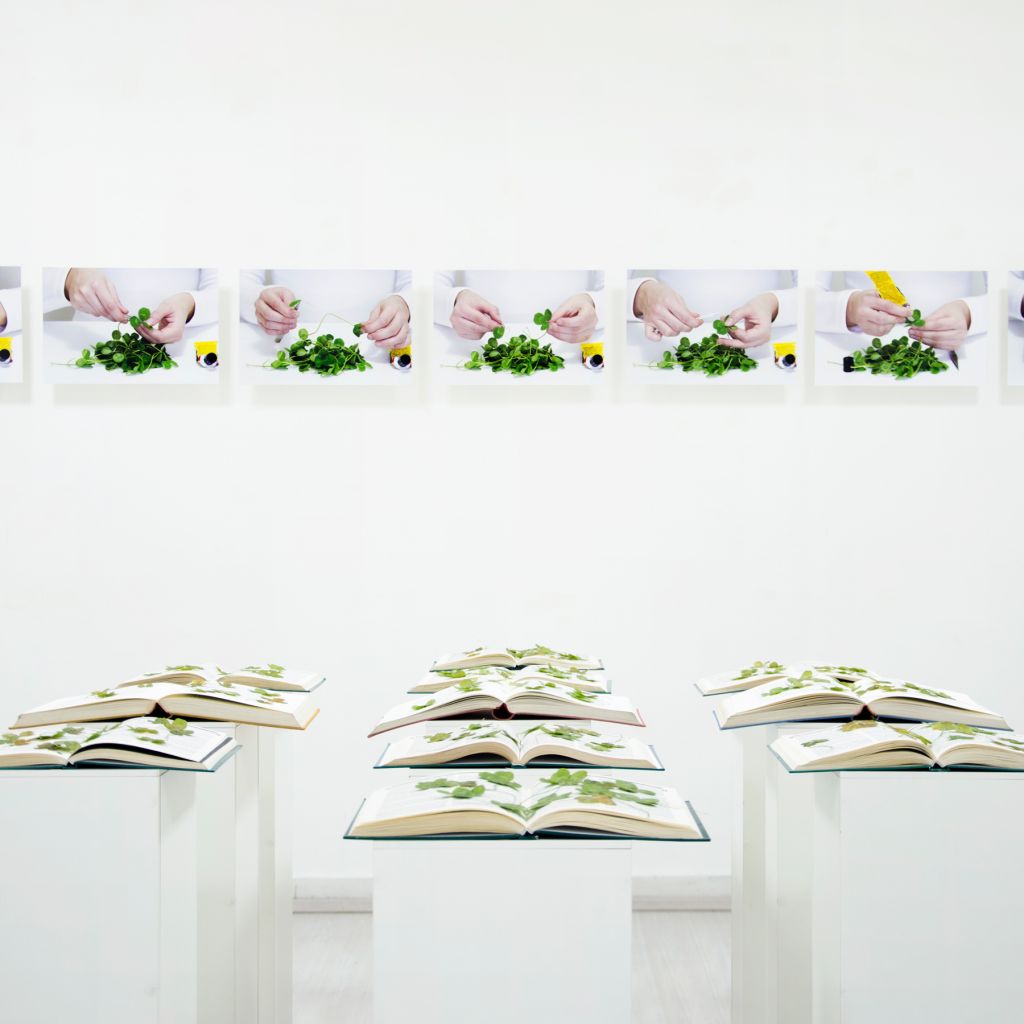
This childhood memory inspired the creation of “Luck – Counterfeit Four-leaf Clovers” work, which incorporates seven photographs, like a manual in few steps that show the process of making four-leaf clovers by sticking the fourth leaf. There are thirteen encyclopedias set on thirteen pedestals with pages opened at random, but due to the essential nature of the encyclopedia data, any combination of texts gives certain meaning. Each encyclopedia has thirteen four-leaf herbarium pressed clovers set. The video displayed on monitor shows the process of collecting the clovers where it is clearly demonstrated that they are actually trifoliate found in nature.
In the superstition, people associate the four-leaf clover with luck. It becomes a symbol of luck that is nowadays used in the iconography of visual communication. Taking example of today popular instructions for achieving instant results, this work is made in a guidance form in “do it yourself” style i.e. It is an instruction in several steps how to make your own “luck”.
The real life is not a childhood play and this work turns its ironic view to the superficial values that we set as an objective we should reach in order to get lucky or be happy.

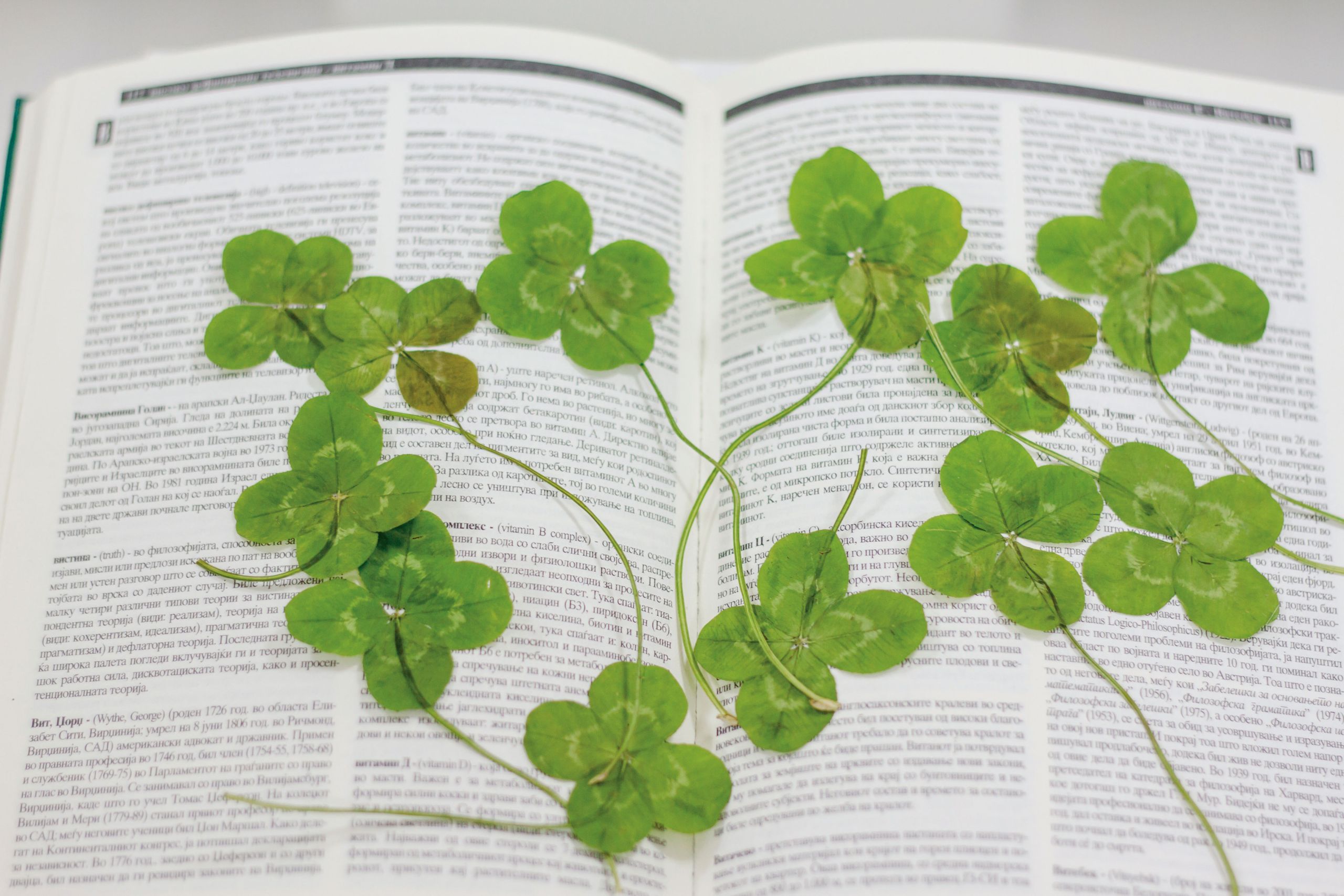

The installation “Luck” combines conceptual and traditional methodologies. The pressed clovers were crafted by attaching a fourth leaf to trifoliate clovers, preserved as herbarium specimens. Encyclopedias, opened to random pages, create meaning by chance, highlighting the role of serendipity. A photographic sequence and video show the process of crafting these clovers.
Seven digital photographs (each 460 x 305 mm), thirteen books placed on thirteen pedestals (each pedestal approx. 900 x 300 x 300 mm), video displayed on monitor (dimensions variable). Overall installation dimensions are variable and depend on exhibition space.
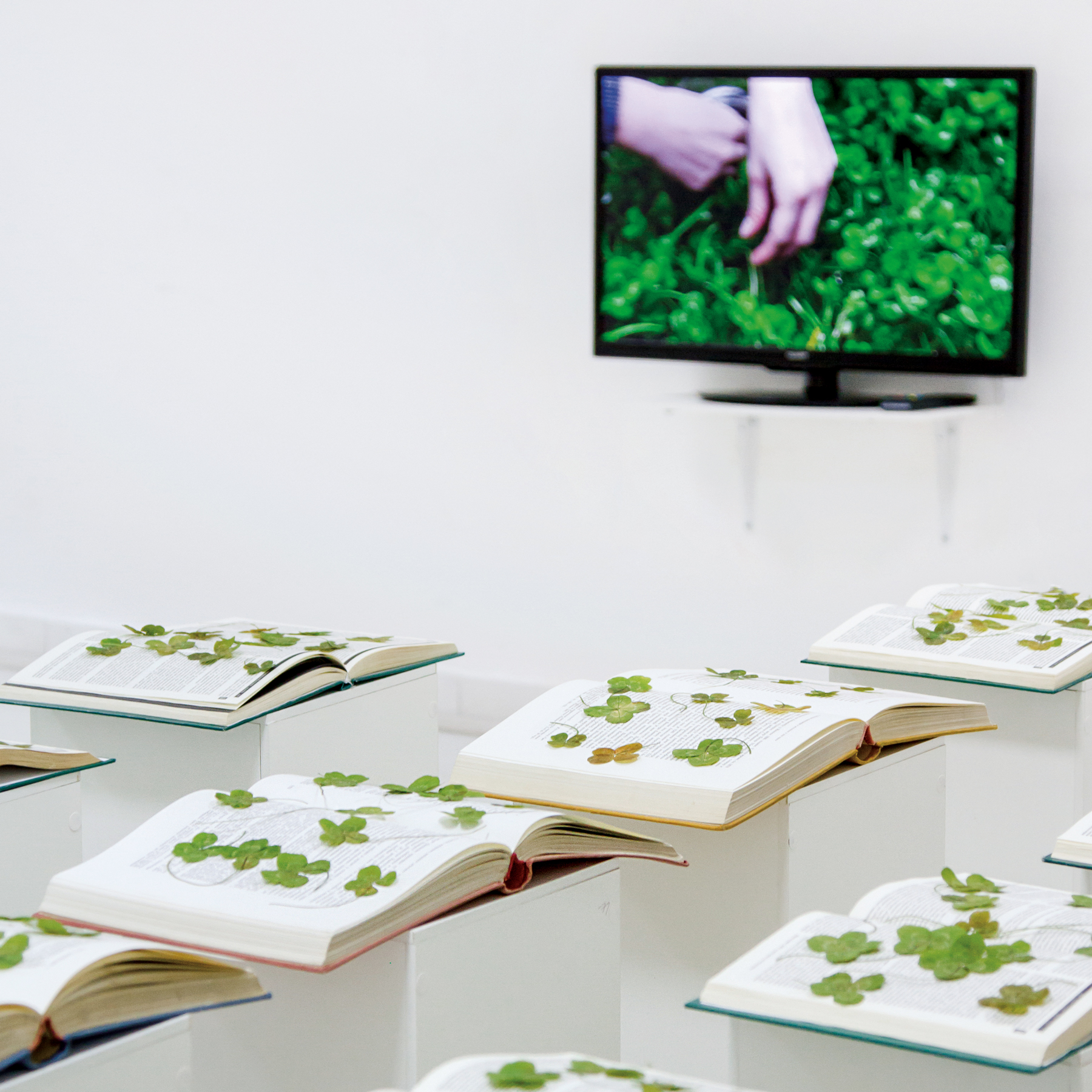
The project began in December 2014 in Skopje and premiered as part of the solo exhibition “Cleanroom” at Gallery KO-RA, House of Culture “Koco Racin”, where it was on view from December 24, 2014 to January 20, 2015. The installation was exhibited again in 2016, with slight spatial adaptations, in the continuation of “Cleanroom” at Gallery Casa da Garrida, University Fernando Pessoa, Ponte de Lima, Portugal. In 2015, it was also shown at Gallery Karas, Zagreb, as part of a group exhibition, and in 2021 it was featured in “Beyond the Borders” at the Chang Kil-Hwan Art Museum, Gangneung, South Korea.
Seven digital photographs (each 460 x 305 mm), thirteen books placed on thirteen pedestals (each pedestal approx. 900 x 300 x 300 mm), video displayed on monitor (dimensions variable). Overall installation dimensions are variable and depend on exhibition space.